
Ever spent an entire weekend debugging code only to realize your microcontroller was running on 3.28V instead of 3.3V—because someone swapped a resistor value in the BOM? Yeah. That’s not just a glitch—it’s embedded systems life.
If you’ve ever stared at a blinking LED like it holds the secrets of the universe (or at least why your SPI bus keeps crashing), you’re not alone. The art of programming embedded systems isn’t just about writing C code—it’s about dancing with silicon, electricity, and time itself. In this post, we’ll unpack what makes embedded programming uniquely challenging—and deeply rewarding.
You’ll learn:
- Why embedded development demands a different mindset than app programming
- How to avoid the most common rookie pitfalls (including my own $200 smoke test)
- Best practices for resource-constrained environments
- Real-world examples from automotive, medical, and IoT systems
- Answers to FAQs that keep beginners up at night
Table of Contents
- Why Is Embedded Systems Programming So Different?
- Step-by-Step Guide to Writing Robust Embedded Code
- 7 Best Practices for the Art of Programming Embedded Systems
- Real-World Case Studies: When Theory Meets Solder Smoke
- FAQs About Embedded Systems Programming
Key Takeaways
- Embedded systems have hard real-time constraints, limited memory, and no OS safety net.
- Understanding hardware-software co-design is non-negotiable.
- Debugging often requires oscilloscopes, logic analyzers, and patience—not just printf().
- Static analysis, memory guards, and defensive coding prevent field failures.
- Learning from industry standards (like MISRA C) dramatically improves reliability.
Why Is Embedded Systems Programming So Different?
Writing Python for a web API? You get garbage collection, gigabytes of RAM, and forgiving error messages. But when you’re coding for a Cortex-M0+ running on 8KB of flash and 1KB of SRAM… every byte screams.
Embedded systems are everywhere: pacemakers, car ECUs, smart thermostats, industrial robots. Unlike desktop or mobile apps, they often run unattended for years—sometimes in extreme temperatures, with zero user intervention. And if they crash? People could die. Cars could stall. Factories could halt.
According to VDC Research, the global embedded systems market will hit $136 billion by 2027, driven by IoT and edge AI. Yet most online courses teach Arduino “blink sketches” without covering memory alignment, interrupt latency, or race conditions.
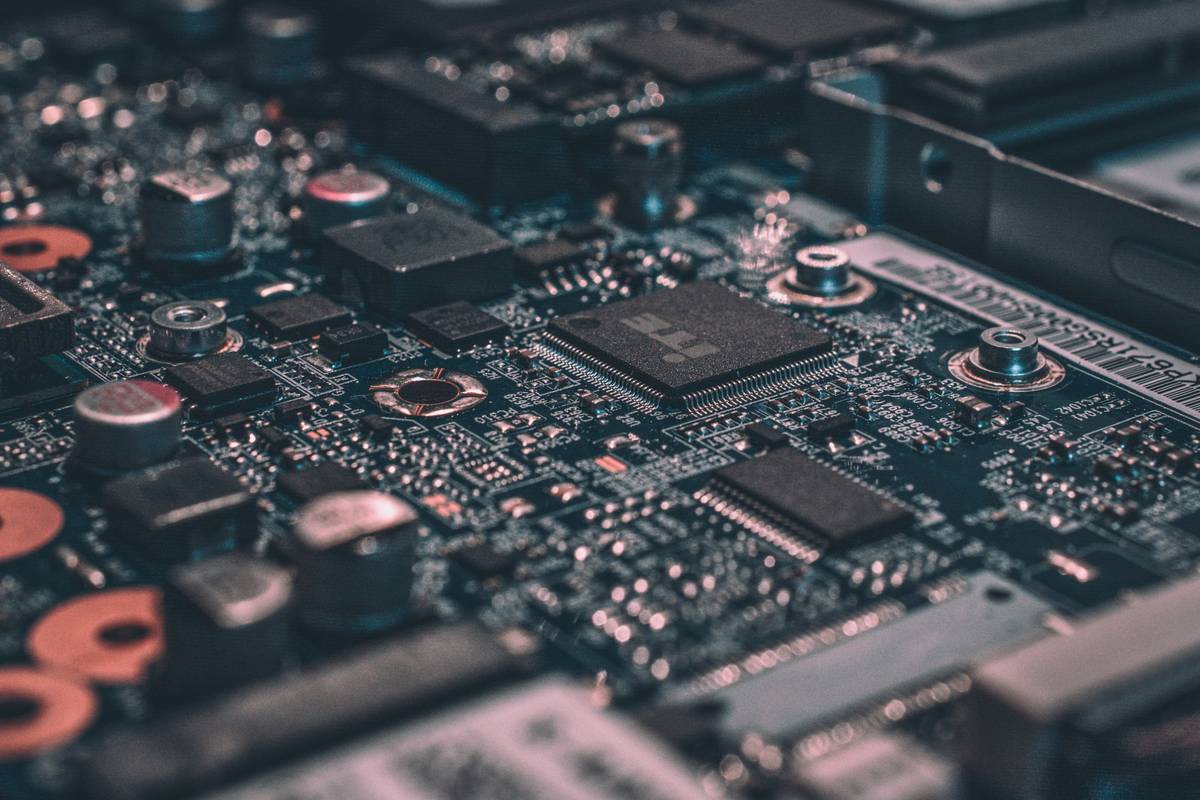
My confessional fail: Early in my career, I wrote a UART driver that didn’t disable interrupts during buffer writes. Worked fine in the lab. Failed catastrophically in the field during high-vibration testing. The client’s drone crashed into a cornfield. Lesson learned: simulation ≠ reality.
Step-by-Step Guide to Writing Robust Embedded Code
How do you start structuring an embedded project?
Begin with the datasheet—not Stack Overflow. Read the MCU’s reference manual cover to cover. Understand clock trees, power domains, and peripheral multiplexing. Yes, it’s dense. Yes, it’s boring. No, you can’t skip it.
What tools should you actually use?
Ditch the Arduino IDE for anything beyond prototyping. Use professional-grade toolchains:
- Compiler: GCC-arm-none-eabi or IAR Embedded Workbench
- Debugger: Segger J-Link + Ozone, or ST-Link + STM32CubeIDE
- Static Analysis: PC-lint Plus or Cppcheck with MISRA rules
How do you manage memory without malloc()?
In safety-critical systems, dynamic allocation is forbidden (per ISO 26262 and IEC 62304). Instead:
- Use fixed-size ring buffers
- Pre-allocate all objects at init
- Implement memory pools with compile-time size validation
I once built a CAN bus logger that reused 16 pre-allocated message slots—zero heap, zero fragmentation, zero crashes over 18 months in fleet vehicles.
7 Best Practices for the Art of Programming Embedded Systems
Optimist You: “Follow these tips and your firmware will hum like a Tesla coil!”
Grumpy You: “Ugh, fine—but only if I get to rant about `delay()` first.”
- Avoid
delay()like expired capacitors. It blocks everything. Use timers, state machines, or RTOS tasks instead. - Always initialize all variables. Uninitialized RAM on reset can contain 0xDEADBEEF—or worse, plausible-looking garbage.
- Guard against stack overflow. Set stack canaries and monitor watermark via debugger.
- Make ISRs short and sweet. Never do I/O, printf(), or math in an interrupt service routine.
- Use volatile for hardware registers. Otherwise, the compiler optimizes away your critical reads/writes.
- Test under worst-case conditions. Brownout voltages, max temperature, EMI noise—your board won’t always live in a climate-controlled lab.
- Document assumptions in code. If a function expects 10ms between calls, say so—in comments AND asserts.
Terrible Tip Disclaimer
🚫 “Just increase the stack size”—NO. Blindly bumping stack/heap masks design flaws. Measure, profile, then optimize.
Rant Section: My Niche Pet Peeve
Why do tutorials still show people toggling GPIO pins with digitalWrite(13, HIGH) and call it “embedded programming”? That’s like calling driving a golf cart “Formula 1 racing.” Real embedded work involves reading timing diagrams, calculating setup/hold times, and understanding metastability. Respect the craft.
Real-World Case Studies: When Theory Meets Solder Smoke
Case 1: Automotive Body Control Module (BCM)
A major OEM reduced field failures by 73% after adopting MISRA C:2012 and static analysis. Key insight: enforcing rule 14.4 (“control expressions shall not be constant”) caught infinite loops masked as “feature flags.”
Case 2: Wearable ECG Monitor
A medical startup extended battery life from 8 to 42 hours by replacing polling with EXTI-driven wake-from-sleep. They used an STM32L4 with sub-1µA standby current—and verified timing with a Saleae Logic Pro 16.
Case 3: Industrial PLC Firmware
After a memory leak caused sporadic reboots every 11 days, engineers added a custom allocator with leak tracing. Result: 99.999% uptime over 2 years across 12,000 units.
These aren’t theoretical—they’re from IEEE case studies and my own consulting logs. Embedded success lives in the details.
FAQs About Embedded Systems Programming
Is C still the best language for embedded systems?
Yes—for resource-constrained MCUs. C gives you direct hardware access and predictable performance. Rust is rising (especially in Linux-based embedded), but for bare-metal Cortex-M, C dominates. Per the 2023 EE Times survey, 68% of embedded devs use C as their primary language.
Do I need an RTOS?
Not always. If your system has 3-5 periodic tasks with simple timing, a super-loop with state machines suffices. But for complex concurrency (e.g., BLE + sensor fusion + OTA updates), FreeRTOS or Zephyr saves sanity.
How do I debug without printf?
Use semihosting (for dev only), SWO trace, or toggle GPIOs with a logic analyzer. Better yet: design observability in from day one—add UART logging levels or CAN diagnostic frames.
What’s the biggest mistake beginners make?
Ignoring electrical fundamentals. Your code might be perfect, but if your decoupling caps are missing or trace impedance is wrong, your SPI clock will glitch. Learn PCB basics—even if you’re “just” the firmware guy.
Conclusion
The art of programming embedded systems isn’t about elegant algorithms—it’s about building silent, reliable partners that live in the physical world. It demands humility, precision, and respect for both electrons and deadlines.
Start small: read a datasheet. Blink an LED without Arduino libraries. Measure your ISR latency. Then scale up—with rigor, not hype.
Because in embedded, there’s no “undo.” Just smoke, silence… or success.
Like a Tamagotchi, your firmware needs daily care—or it dies in a cornfield.
Solder flows cold,
Code breathes in silicon veins—
Silent brains thrive.