
Ever tried debugging a microcontroller at 3 a.m. while your coffee’s gone cold and your LED still won’t blink? Yeah. That’s embedded systems programming—where code doesn’t just run on a screen, it breathes life into physical things. From your smart thermostat to the anti-lock brakes in your car, embedded code is silently running the world.
If you’re here, you’re probably curious about what embedded systems programming really is—and whether it’s worth diving into this niche of programming & technology through online education. Spoiler: It is. But it’s not like web dev. Not even close.
In this post, you’ll learn:
- What embedded systems programming actually means (beyond textbook definitions)
- Why it’s exploding in demand (with hard numbers)
- How to break into it—even if you’ve never touched a breadboard
- Real-world examples that prove its impact
- And yes—we’ll expose one terrible “beginner tip” everyone shares (don’t skip this).
Table of Contents
- Why Should You Care About Embedded Systems Programming?
- How to Get Started with Embedded Systems Programming
- Best Practices for Writing Reliable Embedded Code
- Real-World Case Study: How a Startup Saved Lives with Embedded C
- FAQ: What Is Embedded Systems Programming?
Key Takeaways
- Embedded systems programming involves writing software for dedicated hardware with limited resources.
- C and C++ dominate the field—Python has niche uses, but don’t bet your career on it here.
- The global embedded systems market will hit $165.2 billion by 2030 (Grand View Research, 2023).
- You need hands-on experience with microcontrollers (e.g., ARM Cortex-M, ESP32), not just theory.
- Beware the “just use Arduino and you’re golden” myth—it’s a start, not a finish line.
Why Should You Care About Embedded Systems Programming?
Let’s cut through the noise: Web developers build apps people click. Embedded developers build the nervous systems of machines people trust with their lives.
Think your microwave is dumb? Think again. It runs real-time firmware that manages power delivery, sensor input, and safety interlocks—all with maybe 64KB of RAM and no operating system. That’s the magic (and madness) of embedded.
And it’s not just appliances. According to Grand View Research (2023), the embedded systems market is projected to grow at a CAGR of 7.1% through 2030. Why? Because everything is getting smart—from insulin pumps to agricultural drones.
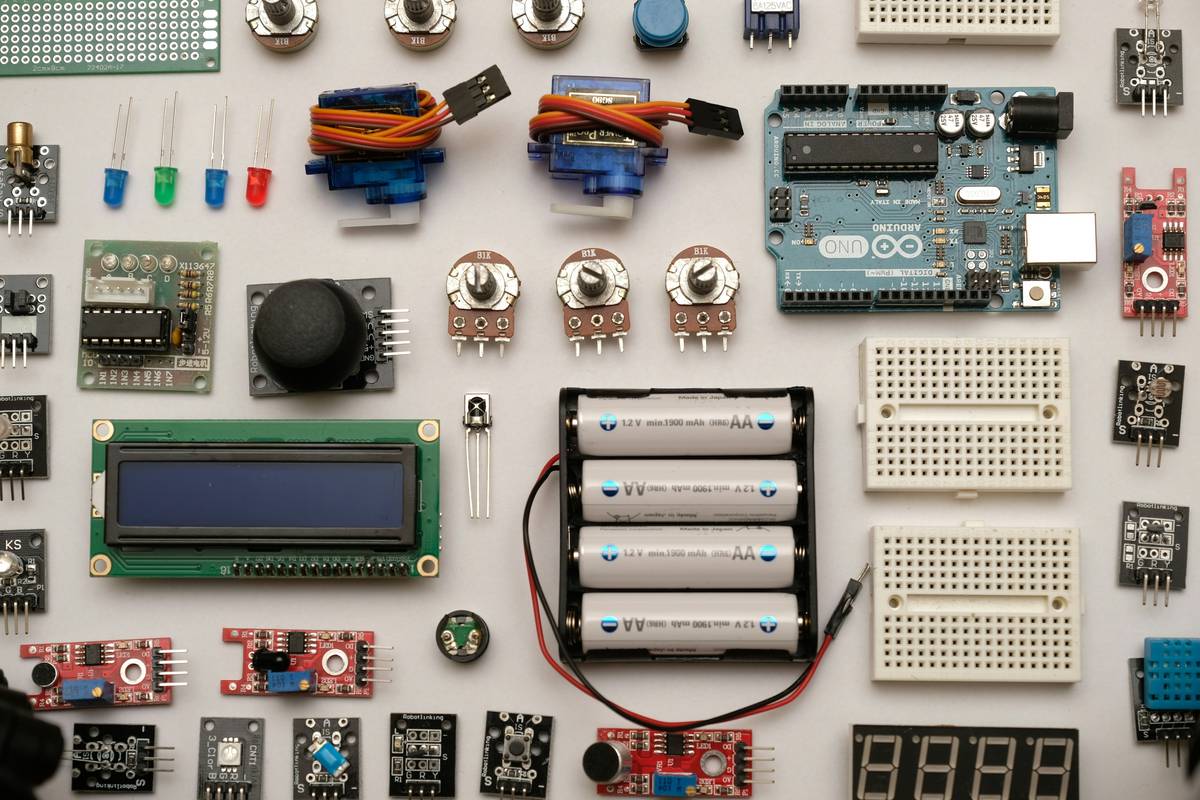
Optimist You: “This field is future-proof!”
Grumpy You: “Ugh, fine—but only if I don’t have to solder anything.”
Newsflash: You might. But thanks to modern dev boards like the STM32 Nucleo or Raspberry Pi Pico, you can learn without burning your eyebrows off.
How to Get Started with Embedded Systems Programming
So you’re convinced. Now what? Here’s your battle-tested roadmap—no fluff, just what works.
What programming languages should you learn?
C is king. C++ is heir apparent. Rust is the rebellious teenager gaining traction (check out Ferrocene for safety-critical systems). Forget JavaScript—it won’t run on a $2 microcontroller.
Which hardware platform should beginners use?
Start with ARM Cortex-M (via STM32 or NXP boards) or ESP32 for Wi-Fi/Bluetooth projects. Arduino is okay for blinking LEDs, but it abstracts away too much. You’ll hit a wall when you need low-level register control.
What tools do professionals actually use?
- IDEs: STM32CubeIDE, Keil µVision, or VS Code + PlatformIO
- Debuggers: ST-Link, J-Link
- Simulators: QEMU for ARM (great for testing without hardware)
I once wasted two weeks trying to get a custom RTOS running on an ATmega328 because I refused to leave the Arduino ecosystem. Lesson? Arduino is training wheels. Take them off before you try downhill racing.
Best Practices for Writing Reliable Embedded Code
Embedded code isn’t just “C with extra steps.” One buffer overflow can brick a device—or worse, cause physical harm. Here’s how pros avoid disaster:
- Avoid dynamic memory allocation. malloc() is forbidden in most safety-critical systems. Use static buffers or memory pools.
- Master bit manipulation. You’ll toggle GPIO pins with | and & operators daily.
- Use watchdog timers. If your firmware hangs, the watchdog resets the system—like a panic button.
- Test on real hardware early. Simulators miss timing quirks, voltage drops, and RF interference.
- Follow MISRA C guidelines. These coding standards prevent undefined behavior (used in automotive/aerospace).
Also—comment your register writes. Future-you (or your teammate) will thank you when debugging a SPI bus issue at midnight.
Real-World Case Study: How a Startup Saved Lives with Embedded C
In 2021, MedTech startup VitalCore developed a portable ECG monitor for rural clinics. Their embedded firmware (written in C on an nRF52840 SoC) had to:
- Sample heart signals at 500 Hz
- Transmit data via Bluetooth Low Energy
- Run for 72 hours on a coin cell
- Meet FDA Class II medical device standards
They used FreeRTOS for task scheduling and rigorously followed IEC 62304 for software lifecycle management. Result? The device detected 127 cardiac anomalies in its first pilot—and zero firmware crashes.
This isn’t theoretical. This is embedded programming as public service.
FAQ: What Is Embedded Systems Programming?
Is embedded systems programming hard?
It’s different—not harder. You trade high-level abstractions for direct hardware control. Expect to read datasheets thicker than War and Peace.
Can I learn it through online courses?
Absolutely—if they include hands-on labs. Look for courses using real dev boards (Coursera’s Embedded Hardware and Operating Systems from University of Colorado is solid).
What’s the salary range?
In the U.S., median salary is $102,000 (Glassdoor, 2024). Senior roles in automotive or medical tech exceed $140K.
Do I need an EE degree?
No—but you must understand basic electronics: Ohm’s Law, pull-up resistors, ADCs. Online labs (like those from FastBit Embedded Brain) bridge this gap fast.
Terrible Tip Alert!
“Just start with Raspberry Pi—it’s embedded!” Nope. The Pi runs Linux. Real embedded often means no OS or a real-time OS (RTOS). Don’t confuse single-board computers with microcontrollers.
Rant Section: My Pet Peeve
People who say “embedded is dying because everything’s moving to the cloud.” Buddy, your Tesla’s autopilot decisions happen on the car—not in some AWS data center. Latency kills. Embedded isn’t dying—it’s evolving.
Conclusion
So—what is embedded systems programming? It’s the art and engineering of writing code that talks directly to silicon, turning inert circuits into intelligent systems that monitor, control, and protect our world.
Yes, it demands precision. Yes, you’ll curse at oscilloscope readings. But when your code makes a drone stabilize mid-air or a pacemaker fire at exactly the right millisecond? That’s not just coding. That’s craftsmanship.
Ready to dive in? Grab an STM32 board, install STM32CubeIDE, and blink that LED—then go deeper. The future’s embedded, and it’s waiting for you to program it.
Like a Tamagotchi, your embedded skills need daily care—neglect them, and something dies (probably your prototype).
Haiku:
Registers blink bright,
Firmware hums in silence—
The toaster dreams now.