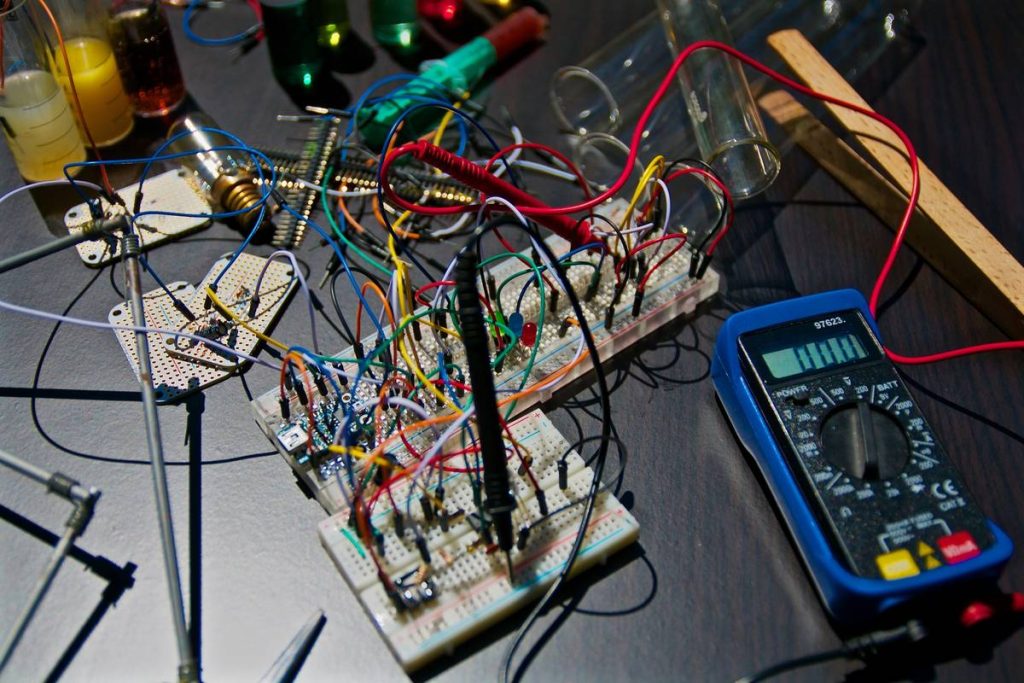
Ever spent three hours debugging a microcontroller only to find you’d soldered the sensor backward? Yeah… we’ve all been there—staring at a silent dev board while your coffee goes cold and your laptop fan whirrs like it’s auditioning for a sci-fi movie. If you’re diving into embedded systems and applications, you’re not just coding—you’re building bridges between software and the physical world. And that’s equal parts thrilling and terrifying.
In this post, you’ll learn exactly what embedded systems are, why they matter in 2024, how to get started (without burning out), real-world use cases that’ll blow your mind, and—crucially—what not to do. Whether you’re an online learner, a career-switcher, or a seasoned dev eyeing IoT, this guide is your roadmap.
Table of Contents
- Why Should You Care About Embedded Systems?
- How to Start Learning Embedded Systems Programming
- 7 Best Practices That Separate Hobbyists from Pros
- Real-World Embedded Systems Applications That Actually Ship
- FAQs About Embedded Systems and Applications
Key Takeaways
- Embedded systems power 98% of the world’s microprocessors—but most are invisible to end users (IEEE, 2023).
- Mastery requires fluency in C/C++, hardware-software co-design, and real-time constraints—not just algorithms.
- Online learners can break into the field with low-cost dev kits (like ESP32 or STM32) and project-based courses.
- Top industries hiring embedded talent: automotive, medical devices, industrial automation, and aerospace.
- Avoid the “Arduino-only” trap—it’s great for prototyping but won’t prepare you for production-grade systems.
Why Should You Care About Embedded Systems?
If you think embedded systems are just about blinking LEDs on a breadboard, think again. These are the unsung heroes behind your pacemaker, your Tesla’s autopilot, and even the smart thermostat that saves you $150 a year. According to a 2023 Statista report, the global embedded systems market is projected to hit $140 billion by 2028—driven by IoT, edge AI, and Industry 4.0.
But here’s the kicker: unlike web or mobile apps, embedded systems operate under strict constraints. Limited memory. No operating system (or a tiny RTOS). Power budgets measured in milliamps. One crash could mean a factory line halts—or worse, a life-support device fails.
I learned this the hard way during my first gig at a med-tech startup. I wrote a “clever” recursive function to parse sensor data. Seemed elegant—until it blew the stack on our ARM Cortex-M0. The device froze mid-calibration. Patient safety wasn’t compromised (thankfully), but our QA lead hasn’t let me live it down since. Lesson? In embedded, elegance loses to reliability every time.
How to Start Learning Embedded Systems Programming
You don’t need a $10k lab or an EE degree. But you do need the right mindset—and tools.
Step 1: Pick Your Hardware Wisely
Optimist You: “Start with Arduino! It’s beginner-friendly!”
Grumpy You: “Ugh, fine—but only if you promise to graduate to bare-metal programming within 3 months.”
Truth: Arduino abstracts away registers, interrupts, and memory maps—critical concepts for real embedded work. Use it to validate ideas, then jump to platforms like:
- STM32 Nucleo (ARM Cortex-M): Industry standard, rich peripherals, free IDE (STM32CubeIDE)
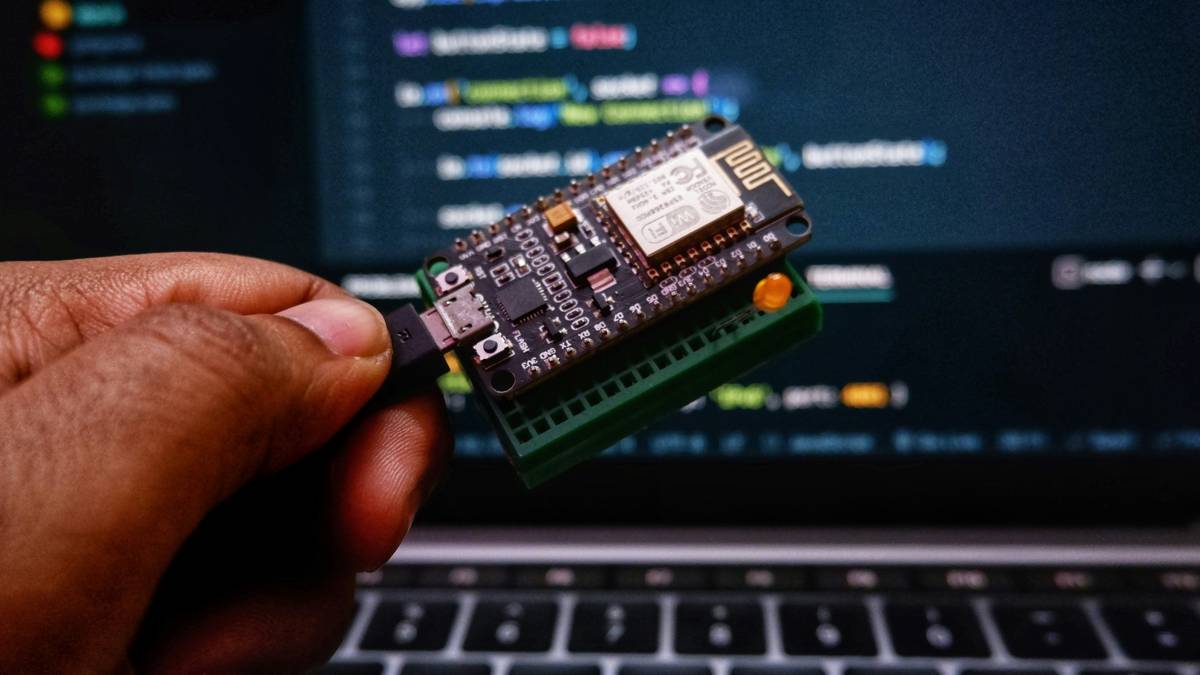
- ESP32: Wi-Fi/BLE built-in, perfect for IoT, but watch power draw
- Raspberry Pi Pico (RP2040): Dual-core, cheap, great for learning multicore coordination
Step 2: Master the Core Triad
Forget Python for now. You need:
- C (not C++… yet): Understand pointers, structs, volatile keywords, and memory layout
- Datasheets: Learn to read them like novels. The STM32F4 reference manual is your Bible.
- Debugging Tools: SWD/JTAG debuggers, logic analyzers (even $10 Saleae clones help)
Step 3: Build Projects That Mimic Reality
No more “Hello World.” Try these instead:
- Read temperature from an I2C sensor, log to SD card, wake every 10 mins on RTC alarm
- Control a DC motor via PWM + encoder feedback using PID loop
- Build a CAN bus node that talks to another dev board (hello, automotive prep!)
7 Best Practices That Separate Hobbyists from Pros
- Never trust floating pins: Always enable pull-ups/downs—floating inputs cause ghost signals.
- Use static analysis: Tools like PC-lint or Cppcheck catch undefined behavior before hardware does.
- Measure current draw early: A scope + shunt resistor reveals battery-killing surprises.
- Modularize your code: Hardware abstraction layers (HAL) let you swap MCUs without rewriting everything.
- Test failure modes: What happens when your sensor disconnects? Simulate it.
- Version your PCBs: Silkscreen “Rev 1.2” saves lives when debugging field units.
- Document assumptions: “This function assumes 3.3V logic” prevents 5V disasters.
Anti-Advice Alert!
❌ “Just use FreeRTOS for everything!”
Reality: FreeRTOS adds overhead. For simple tasks (read sensor → send data), a superloop with state machines is leaner, faster, and easier to certify (yes, certifications like ISO 13485 matter in med-tech).
Real-World Embedded Systems Applications That Actually Ship
Let’s cut through the hype. Here’s where embedded systems shine beyond maker fairs:
Medical Devices: Precision Under Pressure
A colleague at Medtronic shared how their insulin pump runs on an MSP430 MCU. Why? Ultra-low power (years on a coin cell) and deterministic timing. Every line of code underwent MISRA-C compliance checks and formal verification. One typo = recall risk. That’s the stakes.
Automotive: Where Safety Is Non-Negotiable
Modern cars have 100+ ECUs. The brake-by-wire system? Runs on AUTOSAR-compliant software with triple-redundant watchdog timers. Fun fact: Tesla’s FSD computer uses custom ASICs—but the door-lock ECU? Probably an 8-bit chip doing one job, forever.
Industrial IoT: Rugged and Reliable
Siemens’ S7-1200 PLCs run Modbus TCP/IP stacks on stripped-down Linux. But the real magic? Field firmware updates over CAN bus—with rollback on CRC failure. Because nobody wants to climb a wind turbine at 3 a.m. to fix a bad OTA.
FAQs About Embedded Systems and Applications
What’s the difference between embedded systems and IoT?
All IoT devices contain embedded systems, but not all embedded systems are IoT. A microwave’s timer is embedded but not connected. Add Wi-Fi control? Now it’s IoT.
Do I need an electrical engineering degree?
No—but you must understand Ohm’s Law, signal integrity basics, and how ADCs/DACs work. Online courses like UT Austin’s “Embedded Systems – Shape The World” (edX) bridge this gap.
Which programming language is best for embedded systems?
C dominates (85% of projects, per IEEE 2023). C++ is rising in complex systems (e.g., drones). Rust is promising for memory safety but lacks mature HAL support.
How much math do I need?
Basic algebra and boolean logic daily. Calculus rarely. But you will use binary/hex arithmetic constantly (“Why is my register 0xA3?”).
Conclusion
Embedded systems and applications aren’t just about code—they’re about crafting resilient, efficient solutions that interact with the real world. The path demands patience (and a good multimeter), but the payoff is immense: you build things that do, not just display. Start small, respect the hardware, and never stop testing at the edges. Your future self—calibrating a satellite comms module or debugging a surgical robot—will thank you.
Like a Tamagotchi, your embedded project needs constant care… but feeds on clean power and thoughtful code.
Blink… compile… deploy.
Silicon dreams take flight.
Real world, meet bytes.