
Ever spent an entire weekend debugging code… only to realize you’d plugged your LED into ground instead of VCC? Yeah. We’ve all been there—staring at a flickering board like it owes us rent, wondering why your “Hello World” equivalent won’t just blink already.
If you’re here, you likely want to learn embedded systems programming—but you’re drowning in jargon, toolchains that crash more than they compile, and tutorials that assume you already know what a UART is. This guide cuts through the noise. You’ll learn exactly how to start (and stick with) embedded systems programming online—with real resources, proven learning paths, and zero fluff.
In this post, you’ll discover:
• Why most beginners fail within 48 hours (and how to avoid it),
• The single dev board that’s worth every penny in 2024,
• A step-by-step roadmap from blinking LEDs to writing RTOS code,
• And the brutal truth about YouTube tutorials that waste your time.
Table of Contents
- Key Takeaways
- Why Is Learning Embedded Systems So Hard?
- How to Learn Embedded Systems Programming: Step by Step
- Best Practices for Staying Sane While Coding Hardware
- Real-World Case Study: From Zero to IoT Device in 90 Days
- FAQ: Learn Embedded Systems Programming
Key Takeaways
- Start with ARM Cortex-M (not Arduino) if you’re serious about professional embedded roles.
- Debugging > coding—master your debugger early (hello, SWD pins).
- Use vendor-provided HAL libraries first, then peel back layers as you gain confidence.
- Simulators can’t replace real hardware—budget $30–$50 for a dev board ASAP.
- Join communities like EEVblog or STM32 subreddits—they’ll save you weeks of frustration.
Why Is Learning Embedded Systems So Hard?
Embedded systems programming sits at the chaotic intersection of software logic and physical hardware behavior. Unlike web dev—where bugs throw exceptions—you get silence. Smoke. Or worse: intermittent glitches that vanish when you stare too hard.
According to IEEE’s 2023 Embedded Developer Survey, 68% of new learners abandon embedded projects within two weeks due to toolchain complexity, unclear documentation, or lack of hands-on guidance. I’ve been there: once burned a $40 Nucleo board because I ignored the absolute maximum ratings in the datasheet. (Pro tip: 5V ≠ 3.3V tolerant. Ever.)
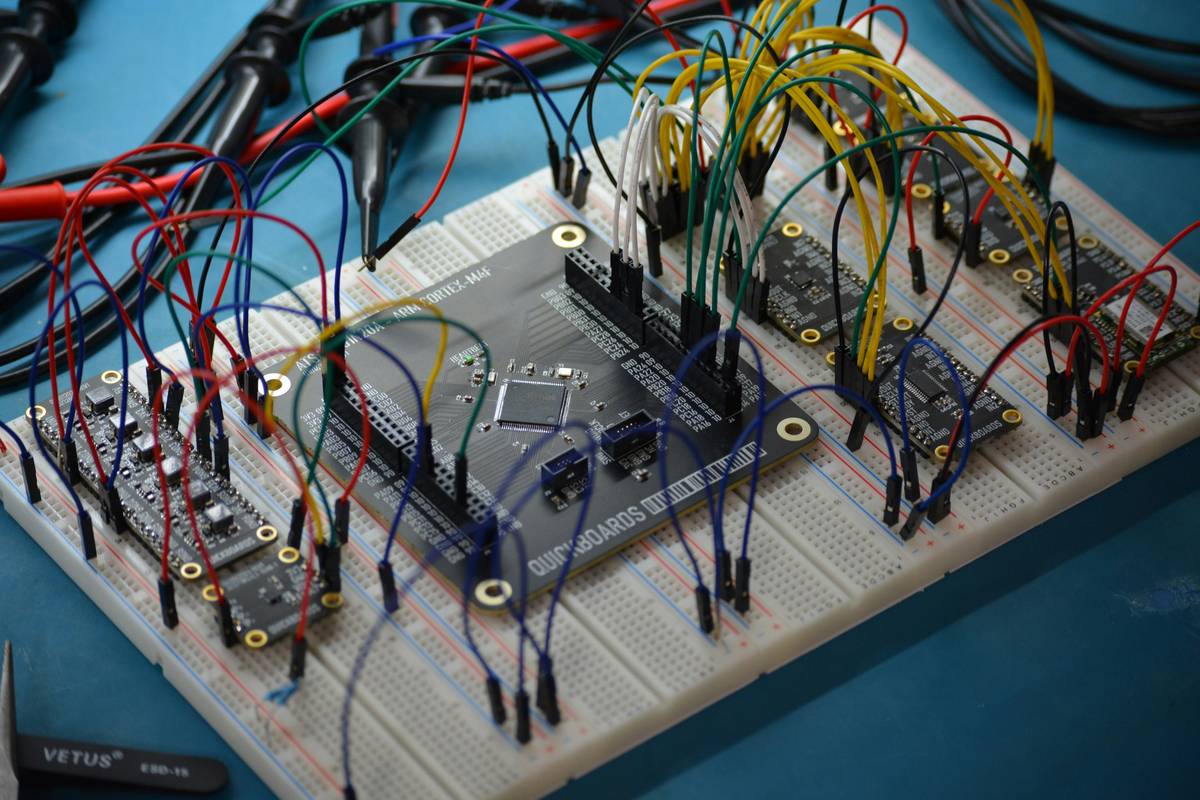
Optimist You: “It’s just C code on a tiny computer!”
Grumpy You: “Ugh, fine—but only if my JTAG adapter stops pretending it’s a USB mouse.”
How to Learn Embedded Systems Programming: Step by Step
Step 1: Ditch the Arduino Crutch (Unless You’re a Total Beginner)
Arduino’s great for lighting up LEDs—but it hides registers, interrupts, and memory mapping behind friendly abstractions. If your goal is to learn embedded systems programming for jobs or advanced projects, jump straight to ARM Cortex-M microcontrollers (like STM32 or ESP32-C3).
Why? Because Arm Holdings powers over 70% of embedded chips globally (per Arm’s 2024 report). Employers expect familiarity with CMSIS, HAL, and bare-metal concepts.
Step 2: Get the Right Hardware First
Skip the $2 AliExpress “development boards”—they lack debug support. Instead, spend $15–$25 on:
• STM32F4 Discovery (for power users), or
• ESP32-DevKitC (if you love Wi-Fi/Bluetooth).
Both include built-in ST-LINK or JTAG debuggers—critical for stepping through code like a sane human.
Step 3: Master Your Toolchain (Without Losing Your Mind)
Forget online compilers. Install:
1. **STM32CubeIDE** (free, Eclipse-based, includes GCC + debugger), or
2. **PlatformIO** in VS Code (better for ESP32 fans).
Configure OpenOCD or ST-LINK once—and never touch `makefile` hell again. Seriously, your future self will thank you when breakpoints actually work.
Step 4: Learn to Read Datasheets Like a Pro
A datasheet isn’t a novel—it’s a reference manual. Focus on:
• Pinout diagrams,
• Absolute max ratings,
• Peripheral block diagrams (UART, SPI, I2C),
• Memory map sections.
I keep STM32F4’s RM0090 open 80% of my dev time. Bookmark yours.
Best Practices for Staying Sane While Coding Hardware
- Always use version control—even for tiny projects. Git tracks working states before you “optimize” into oblivion.
- Enable compiler warnings at -Wall -Wextra. Undefined behavior in embedded = fire in the lab.
- Test power consumption early. A sleeping MCU drawing 5mA will kill your battery in days.
- Write unit tests for logic—mock hardware peripherals using Ceedling or Unity framework.
- Never skip the oscilloscope. Logic analyzers are cheap (Saleae clones ~$30) and expose timing bugs simulators miss.
Grumpy Optimist Rant: If I see one more tutorial telling beginners to “just add a capacitor” without explaining ESR, capacitance value selection, or derating curves… I swear. Capacitors aren’t magical smoke absorbers—they’re physics. Treat them like it.
Terrible Tip to Avoid
“Just watch random YouTube videos until it clicks.” Nope. Embedded has too many moving parts (literally). Without structured progression, you’ll end up with fragmented knowledge—and fried GPIOs.
Real-World Case Study: From Zero to IoT Device in 90 Days
Last year, Maria—a former Java backend dev—wanted to pivot into embedded. She followed this exact path:
• Week 1–2: Learned C refresher + STM32CubeIDE setup
• Week 3–4: Built a temperature logger using I2C sensor + SD card
• Week 5–8: Added FreeRTOS for task scheduling
• Week 9–12: Integrated AWS IoT Core via MQTT over Wi-Fi
Result? She shipped a prototype to her employer—and got promoted to firmware engineer. Her secret? She treated learning like a sprint, not a marathon: 90 minutes/day, no more. Consistency beats heroics in embedded land.

FAQ: Learn Embedded Systems Programming
Do I need an EE degree to learn embedded systems programming?
No—but you must understand Ohm’s Law, voltage dividers, and pull-up resistors. Resources like Khan Academy’s EE section fill gaps fast.
Which language should I learn: C or C++?
Start with C. It’s closer to the metal, and 90% of production firmware still uses it (per Stack Overflow 2023). Add C++ later for OOP in larger systems.
Can I learn embedded systems programming purely online?
Yes—if you pair theory with real hardware. Platforms like University of Colorado’s Coursera specialization (taught by Dr. Harris) blend lectures with hands-on labs using affordable kits.
How long does it take to become job-ready?
With focused effort: 4–6 months. Build 3–5 non-trivial projects (e.g., motor controller, sensor fusion, RTOS app) and document them on GitHub.
Conclusion
To learn embedded systems programming, you don’t need a PhD—or even a fancy lab. You need the right hardware, a structured path, and the grit to stare down cryptic error codes until they confess. Start small. Debug relentlessly. And remember: every expert was once a beginner who refused to unplug their board in frustration.
Now go blink that LED—on purpose this time.
Like a Tamagotchi, your microcontroller needs daily attention… or it dies silently in the corner.
Blink once, blink twice
Registers set just right—
Code runs in the night.