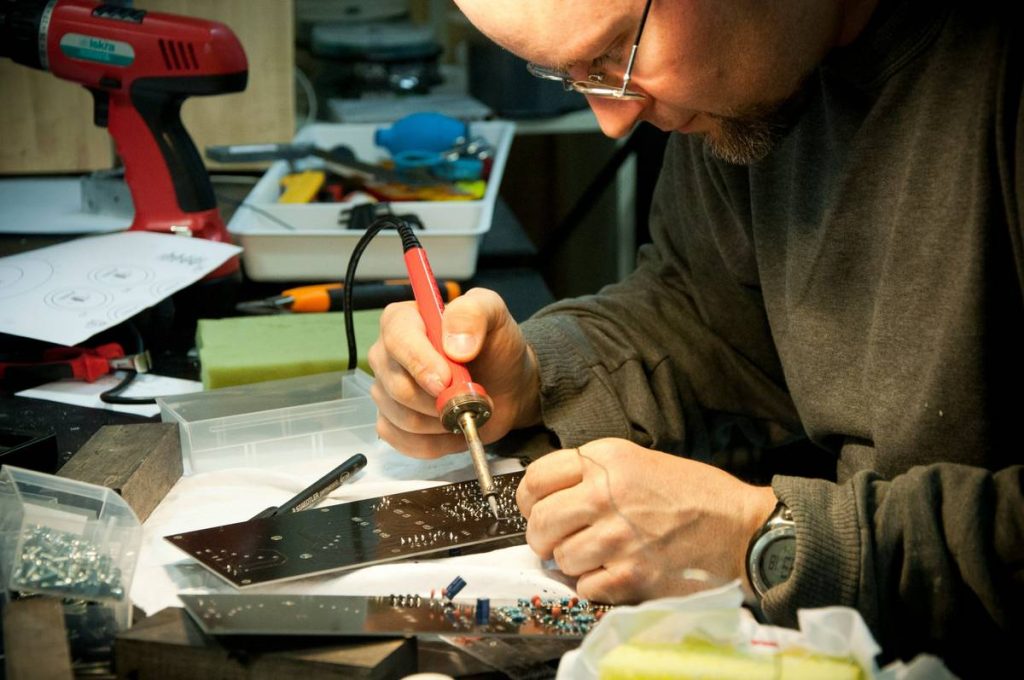
Ever spent three days debugging a microcontroller only to realize your sensor died because you ignored thermal throttling in your design technology in embedded system? Yeah. We’ve all been there—soldering iron in one hand, existential dread in the other, wondering if “embedded” stands for “endlessly broken.”
If you’re diving into embedded systems programming—whether you’re building a smart thermostat, a drone flight controller, or an industrial PLC—you’re not just coding. You’re engineering at the intersection of hardware, firmware, and real-world chaos. And that demands more than C syntax: it demands thoughtful design technology.
In this post, we’ll cut through the academic fluff and show you exactly what design technology in embedded systems really means, why it’s non-negotiable in 2024, and how to apply it like a pro—even if you’re learning online from your garage in pajamas. You’ll learn:
- Why “code-first” approaches fail in constrained environments
- The 4 pillars of modern embedded design technology (with real toolchains)
- How one startup slashed power consumption by 63% using systematic co-design
- Free, university-grade resources to level up fast
Table of Contents
- Why Does Design Technology in Embedded Systems Even Matter?
- Step-by-Step: Implementing Design Technology in Your Embedded Workflow
- 7 Best Practices That Separate Hobbyists from Pros
- Real-World Case Study: From Prototype to Production with Design Discipline
- FAQs About Design Technology in Embedded Systems
Key Takeaways
- Design technology in embedded systems isn’t about aesthetics—it’s about structured co-design of hardware and software under constraints.
- Ignoring power, timing, memory, and thermal budgets leads to field failures—even with “perfect” code.
- Tools like STM32CubeMX, PlatformIO, and Model-Based Design (MBD) enforce design discipline early.
- Online learners can access industry-grade methodologies via edX, Coursera, and open-source EDA ecosystems.
Why Does Design Technology in Embedded Systems Even Matter?
Let’s be brutally honest: most online tutorials teach you to blink an LED and call it a day. But real embedded work? It lives in the gaps between abstraction layers—where RAM is measured in kilobytes, deadlines are hard, and your device might operate in -40°C Siberian oil fields.
“Design technology” here refers to the systematic methodology used to architect, model, simulate, verify, and deploy embedded systems while respecting physical and resource constraints. It’s not UI/UX. It’s not CAD. It’s the glue that binds silicon to software.
According to a 2023 IEEE survey, 68% of embedded project delays stem from late-stage integration issues—often because teams treated firmware as an afterthought to hardware. Yikes.
And if you’re learning remotely? This gap widens. Without lab access or mentors, it’s easy to fall into the “Arduino trap”: rapid prototyping without architectural rigor. Fun until your battery dies in 2 hours or your CAN bus glitches during a firmware update.

Optimist You: “We can fix it in software!”
Grumpy You: “Says the person who hasn’t debugged a race condition on a bare-metal RTOS at 3 a.m. Pass the oscilloscope—and ibuprofen.”
Step-by-Step: Implementing Design Technology in Your Embedded Workflow
How Do I Start Applying Design Technology If I’m Self-Taught?
You don’t need a $10k FPGA dev kit. You need process. Here’s how to bake design discipline into your solo projects:
Step 1: Define Non-Functional Requirements First
Before writing a single line of code, document:
- Max power budget (e.g., 10 mW average for 2-year coin-cell life)
- Worst-case response time (e.g., motor shutdown within 2 ms of fault detection)
- Memory footprint limits (e.g., ≤32 KB Flash for OTA updates)
This forces hardware-aware design from day one.
Step 2: Use Abstraction Layers—Wisely
HARD TRUTH: HALs (Hardware Abstraction Layers) are double-edged swords. They speed up dev but hide timing realities.
Pro move: Use STM32CubeMX or ESP-IDF to generate HAL code, then audit critical paths manually. Never assume the abstraction handles cache coherency or interrupt latency.
Step 3: Simulate Before You Solder
Leverage free tools:
- ESP RainMaker for Wi-Fi/BLE behavior
- Simulink (free via university licenses) for Model-Based Design
- Renode by Antmicro for full-system emulation (runs on Linux/macOS/Windows)
I once avoided $2K in respins by catching a DMA buffer overflow in Renode—before ordering PCBs.
Step 4: Adopt Continuous Integration for Firmware
Yes, even for embedded! Use GitHub Actions with PlatformIO to:
- Compile for 3 targets on every push
- Run static analysis (Cppcheck, PC-lint)
- Enforce MISRA-C rules if safety-critical
Your future self will thank you when your team scales.
7 Best Practices That Separate Hobbyists from Pros
- Profile, Don’t Guess: Use Segger SystemView or FreeRTOS+Trace to measure actual task execution—not theoretical cycles.
- Design for Failure: Assume sensors lie, comms drop, and power glitches. Implement watchdogs + state recovery.
- Version Your Schematics AND Code Together: Use KiCad + Git submodules so firmware matches hardware rev.
- Thermal ≠ Optional: A CPU throttling at 85°C breaks timing guarantees. Simulate in Ansys or use conservative derating.
- Avoid Dynamic Allocation: malloc() in embedded? Only if you enjoy memory fragmentation nightmares.
- Document Assumptions: Comment why you chose polling over interrupts—not just what the code does.
- Test on Real Silicon Early: No emulator perfectly mimics clock jitter or analog noise.
Terrible Tip Disclaimer: “Just use Arduino for everything!”
No. Arduino abstracts away too much for production systems. Great for learning GPIO—but dangerous for anything deployed beyond your breadboard.
Real-World Case Study: From Prototype to Production with Design Discipline
How AgroTech Startup GreenRoot Cut Power Use by 63%
GreenRoot built soil-monitoring nodes for remote farms. Their first prototype—a Feather M4 + LoRa—lasted 3 weeks on AA batteries. Goal: 2 years.
They applied design technology systematically:
- Co-Design Audit: Switched to ultra-low-power nRF52840 SoC with integrated BLE/LoRa.
- Event-Driven Architecture: Replaced polling loops with GPIO interrupts from moisture sensors.
- Sleep Optimization: Used Nordic’s nRF Connect SDK to enter System OFF mode (0.5 µA draw).
- Firmware Updates Over-the-Air: Designed delta-patch updates to minimize radio-on time.
Result? 63% lower average current, 22-month field life, and zero hardware respins. Total R&D cost: under $15K—all done by two engineers learning via Coursera’s Embedded Hardware and Operating Systems specialization.
FAQs About Design Technology in Embedded Systems
Is “design technology” the same as PCB design?
No. PCB layout is one output of the design technology process—but the methodology includes requirements, modeling, simulation, verification, and deployment strategy.
Can I learn this online without an EE degree?
Absolutely. Platforms like edX (offering courses from UT Austin and Delft) and Udacity’s IoT Nanodegree teach hardware-software co-design fundamentals. Pair with hands-on kits (SparkFun, Seeed Studio) for practice.
Does RTOS choice affect design technology?
Hugely. FreeRTOS, Zephyr, and ThreadX offer different abstractions for concurrency, memory protection, and power management—impacting your entire architecture. Choose based on certification needs (e.g., IEC 61508) and community support.
What’s the biggest mistake beginners make?
Treating the microcontroller as a “mini Linux.” Embedded systems lack MMUs, virtual memory, and graceful degradation. Respect the metal—or it will bite back.
Conclusion
Design technology in embedded system isn’t jargon—it’s survival. In a world where your code runs inside pacemakers, EVs, and Mars rovers, cutting corners on co-design, power budgets, or verification isn’t just sloppy; it’s dangerous.
But here’s the good news: you don’t need a corporate R&D lab. With disciplined methodology, free simulation tools, and online education that actually mirrors industry practice, you can engineer robust embedded systems from your kitchen table.
So next time you’re tempted to skip the thermal simulation or ignore worst-case execution time… remember: blinking LEDs won’t save lives. Thoughtful design will.
Like a Tamagotchi, your embedded system needs daily care—not just code snacks.
Power on, sleep deep,
Bits meet volts in silent dance—
Design guides the pulse.