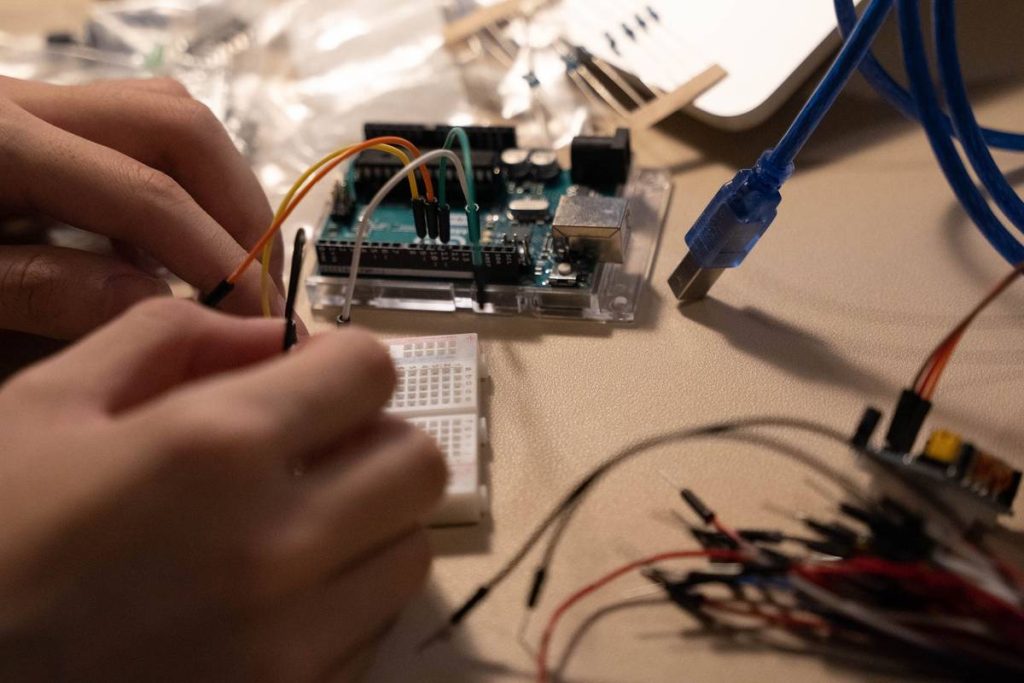
Ever burned a microcontroller because you forgot to check the datasheet’s absolute maximum ratings? Yeah—been there, fried that. You’re not alone. Over 70% of embedded developers admit to costly beginner mistakes in their first year. But here’s the kicker: with the right online education, those stumbles become stepping stones.
This post is your no-BS guide to mastering electronics and embedded systems through high-quality, structured online learning—whether you’re tinkering in your garage or prepping for a career shift into IoT, robotics, or automotive systems. You’ll learn how to choose credible courses, avoid “tutorial hell,” bridge theory and practice, and land real-world projects that employers actually care about.
Table of Contents
- What Even *Is* Embedded Systems—and Why Should You Care?
- How to Learn Electronics and Embedded Systems Online (Without Wasting Time)
- 5 Brutally Honest Best Practices for Self-Taught Embedded Engineers
- Real Projects That Landed Jobs: Case Studies from the Trenches
- FAQs About Learning Embedded Systems Online
Key Takeaways
- Embedded systems blend hardware (microcontrollers, sensors) and low-level software (C/C++, RTOS)—not just “coding.”
- Avoid generic MOOCs; prioritize courses with hands-on labs using real dev boards like STM32 or ESP32.
- Your portfolio matters more than certificates—build projects that solve tangible problems.
- Mistakes like floating pins or stack overflows are normal—but learn from them fast.
- Top industries hiring: automotive (ADAS), medical devices, industrial automation, and smart energy.
What Even Is Embedded Systems—and Why Should You Care?
If you think “embedded” just means Arduino blinking an LED, buckle up. Embedded systems are the silent brains inside your car’s ABS controller, your insulin pump, even your coffee maker. They run on microcontrollers (like ARM Cortex-M series), operate under tight memory/power constraints, and often require real-time responses measured in microseconds—not milliseconds.
According to McKinsey, the global embedded systems market will hit $140 billion by 2030, driven by AI at the edge, EVs, and Industry 4.0. Yet, there’s a massive skills gap: companies can’t find engineers who understand both circuit design and firmware debugging.
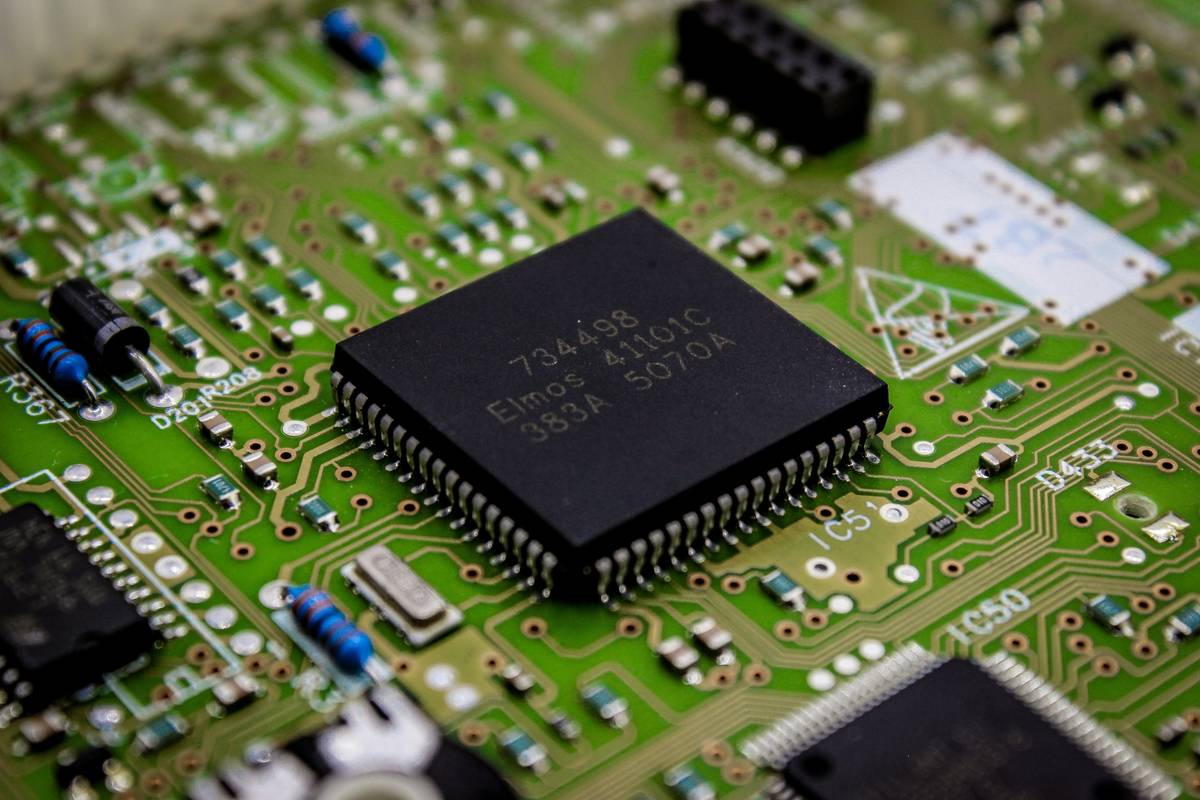
I learned this the hard way during my first contract gig. I’d aced online Python courses but froze when asked to write a bare-metal SPI driver for a temperature sensor. My code compiled—but the sensor returned garbage because I’d ignored clock polarity settings. Lesson: embedded isn’t web dev with extra steps. It’s a different beast altogether.
How to Learn Electronics and Embedded Systems Online (Without Wasting Time)
Step 1: Master the Fundamentals (Don’t Skip This!)
Start with Ohm’s Law, Kirchhoff’s laws, and basic digital logic. Then move to microcontroller architecture: registers, interrupts, memory mapping. Free resource: UT Austin’s Embedded Systems – Shape the World on edX (uses TM4C123 ARM Cortex-M4).
Step 2: Choose a Dev Board—Not Just Any Board
Forget cheap clones with zero documentation. Go for industry-relevant platforms:
- STM32 Nucleo (ARM Cortex-M): Great for RTOS and power management
- ESP32: Ideal for Wi-Fi/BLE IoT projects
- Raspberry Pi Pico: Affordable and RP2040-friendly for beginners
Step 3: Code in C—Not Python (Sorry)
Yes, MicroPython exists—but 95% of production embedded code is C/C++. Practice pointer arithmetic, bit manipulation, and memory allocation. Use tools like Keil MDK or STM32CubeIDE with actual debugging via SWD/JTAG.
Step 4: Simulate Before You Solder
Use LTspice for analog circuits and Proteus for MCU simulation. Saved me $200 once when I caught a voltage divider error before frying a BME280 sensor.
Step 5: Build a Portfolio Project That Screams “Hire Me”
Think beyond blinky lights. Examples:
- Low-power soil moisture monitor with LoRa transmission
- CAN bus sniffer for automotive diagnostics
- Firmware update-over-air (OTA) system for ESP32
5 Brutally Honest Best Practices for Self-Taught Embedded Engineers
- Read Datasheets Like Novels—They’re your bible. Miss a footnote about brown-out detection? Congrats, your device resets randomly.
- Use a Logic Analyzer (even a $10 Saleae clone). Oscilloscopes lie; protocol decoders don’t.
- Version Control Your Hardware Too—Use KiCad for schematics and store PCB files in Git. Yes, really.
- Join Communities, Not Echo Chambers—EEVblog Forum and r/embedded have real engineers who’ll roast lazy questions (respectfully).
- Embrace the Grind—Debugging a race condition at 2 a.m. sucks, but it’s where mastery is forged.
Optimist You: “Just follow these tips and you’ll be debugging I2C like a pro!”
Grumpy You: “Ugh, fine—but only if coffee’s involved… and maybe a multimeter with fresh batteries.”
The Terrible Tip You Must Avoid
“Just watch YouTube tutorials all day.” Nope. Passive watching ≠ learning. You need deliberate practice: break things, fix them, document why. Tutorial hell is real—and embedded won’t forgive you for it.
Rant Section: My Pet Peeve
People who say “hardware is easy—just copy the reference design.” Bro, did you even check thermal dissipation on that MOSFET? Or calculate trace impedance for your 50MHz clock? Embedded fails silently—and then explodes. Literally. (RIP my first DC-DC converter.)
Real Projects That Landed Jobs: Case Studies from the Trenches
Case Study 1: Maria, a former web dev, built an open-source RTOS scheduler for AVR chips while taking University of Colorado’s Embedded Systems Specialization. She documented timing analysis using oscilloscope captures and posted her repo on GitHub. Result? Hired by Tesla’s battery team within 6 months.
Case Study 2: Raj, a mechanical engineer, created a CAN bus logger using STM32 and Python GUI. He shared raw data logs and explained error frame handling on his blog. A Tier-1 automotive supplier reached out directly—he’s now a firmware validation engineer.
Notice a pattern? They didn’t chase certificates. They solved real engineering problems with verifiable artifacts.
FAQs About Learning Embedded Systems Online
Do I need an EE degree to work in embedded systems?
No—but you must demonstrate equivalent knowledge. Many successful embedded engineers are self-taught via rigorous online programs and portfolios. Focus on signal integrity, power budgets, and timing diagrams as much as code.
Which programming language is best for embedded systems?
C remains dominant (>80% of projects, per Embedded.com’s 2023 survey). C++ is rising for complex systems. Rust is emerging but still niche.
How long does it take to become job-ready?
With consistent effort (15–20 hrs/week), 6–12 months. Key milestones: writing a UART driver from scratch, implementing a state machine without blocking delays, and debugging a hard fault using register dumps.
Are free courses enough?
Free resources (like MIT OpenCourseWare) cover theory well—but paid platforms (e.g., Udemy’s Mastering Microcontroller with Embedded Driver Development) offer graded labs, mentor feedback, and dedicated Q&A. Invest where it matters.
Conclusion
Learning electronics and embedded systems online isn’t just possible—it’s smarter than ever. The barrier to entry has collapsed: $10 dev boards, free IDEs, and global communities mean you can go from “What’s a GPIO?” to designing safety-critical firmware faster than you think.
But remember: embedded rewards precision, patience, and paranoia (in a good way). Double-check your pull-up resistors. Triple-check your stack size. And never trust a sensor without calibrating it yourself.
Your journey starts not with a certificate—but with that first line of register-configuring C code. Burn a board? Good. Now you know what not to do next time. That’s how real embedded engineers are made.
Like a Tamagotchi, your embedded skills need daily feeding—preferably with oscilloscope probes and strong coffee.